Can Fashion Be Regenerative?
Exploring the Next Step Beyond Sustainability
Can Fashion Be Regenerative?
Exploring the Next Step Beyond Sustainability


At GildeLab, we often ask ourselves a simple question: Is sustainability enough?
For years, sustainability has been the benchmark for progress in the fashion industry. Brands have worked to reduce waste, lower emissions, improve transparency, and make more responsible material choices. These efforts matter, and they remain essential.
But as environmental and social challenges continue to grow, we believe the conversation needs to go further. Rather than asking how fashion can do less harm, we need to ask how fashion can create more good.
This is where regenerative fashion comes in.
Moving Beyond Sustainability
Sustainability is often about reducing negative impact. Regeneration is about creating positive impact.
A regenerative fashion system doesn’t just aim to preserve resources; it seeks to restore them. It doesn’t simply avoid exploitation; it actively invests in people and communities. It doesn’t view waste as inevitable; it sees opportunities for renewal and reinvention.
At GildeLab, we believe regeneration is not just about materials or agriculture. It is also about people. It is about creating systems that help individuals, communities, and local economies thrive.
Production as a Force for Positive Change
Traditional fashion production is often focused on efficiency and cost reduction. Success is measured by speed, volume, and profit.
Our approach is different.
Every day in our atelier, production serves a dual purpose. We create high-quality products for conscious brands, while simultaneously creating opportunities for women who face barriers to entering the workforce.
For us, making a garment is never just about making a garment.
It is also about building confidence, developing skills, creating connections, and opening doors to future employment. Every project becomes an opportunity for learning and growth.
When we talk about regenerative fashion, this is what we mean: a production system that gives back more than it takes.
Regenerating Human Potential
Fashion is often discussed through the lens of materials and environmental impact, but we believe fashion is first and foremost a human industry.
Behind every product are people with talents, ambitions, and stories.
Through our training and production programs, we work alongside women who are developing professional skills, gaining practical experience, and rebuilding confidence through meaningful work. By participating in real production projects, they are not only learning technical skills but also becoming part of a supportive community that values their contributions.
For us, regeneration starts with recognizing human potential and creating environments where that potential can flourish.
Circularity as a Mindset
Regeneration also requires us to rethink how we use resources.
The fashion industry has long operated on a linear model: produce, consume, and discard. We believe there is a better way. That is why we embrace circular thinking wherever possible. Leftover materials and fabric remnants are not simply waste; they are opportunities for creativity. By repurposing surplus materials into new products and projects, we extend the life of valuable resources while encouraging innovative design solutions.
Circularity is not only about reducing waste. It is about changing our relationship with materials and understanding their value beyond a single use.
The Importance of Local Production
Another principle that guides our work is locality. Global supply chains have created unprecedented scale, but they have also distanced people from the products they make and consume. We believe there is value in rebuilding those connections.
By working locally, we create closer relationships between brands, makers, and communities. We increase transparency, strengthen local skills, and help keep economic value within the region. Local production allows us to see the direct impact of our work—not only on the products we create but on the people involved in creating them.
Rethinking What Success Looks Like
The fashion industry has traditionally measured success in units sold, growth percentages, and profit margins. While these metrics have their place, we believe regenerative fashion requires a broader definition of value.
For us, success also means:
These outcomes may not always appear on a balance sheet, but they are essential indicators of a healthy and resilient system.
The Future We Want to Help Build
We do not believe regenerative fashion is a passing trend. We see it as a necessary evolution.
The challenges facing our industry require more than incremental improvements. They require new ways of thinking about production, value, and impact.
At GildeLab, we are proud to be part of that transition. Through local production, skills development, circular practices, and community building, we are working toward a fashion system that restores rather than depletes.
We know there is still much work to do. But every garment, every training opportunity, and every collaboration brings us one step closer to a future where fashion contributes positively to both people and planet.
Because the future of fashion should not simply be sustainable.
It should be regenerative.
For years, sustainability has been the benchmark for progress in the fashion industry. Brands have worked to reduce waste, lower emissions, improve transparency, and make more responsible material choices. These efforts matter, and they remain essential.
But as environmental and social challenges continue to grow, we believe the conversation needs to go further. Rather than asking how fashion can do less harm, we need to ask how fashion can create more good.
This is where regenerative fashion comes in.
Moving Beyond Sustainability
Sustainability is often about reducing negative impact. Regeneration is about creating positive impact.
A regenerative fashion system doesn’t just aim to preserve resources; it seeks to restore them. It doesn’t simply avoid exploitation; it actively invests in people and communities. It doesn’t view waste as inevitable; it sees opportunities for renewal and reinvention.
At GildeLab, we believe regeneration is not just about materials or agriculture. It is also about people. It is about creating systems that help individuals, communities, and local economies thrive.
Production as a Force for Positive Change
Traditional fashion production is often focused on efficiency and cost reduction. Success is measured by speed, volume, and profit.
Our approach is different.
Every day in our atelier, production serves a dual purpose. We create high-quality products for conscious brands, while simultaneously creating opportunities for women who face barriers to entering the workforce.
For us, making a garment is never just about making a garment.
It is also about building confidence, developing skills, creating connections, and opening doors to future employment. Every project becomes an opportunity for learning and growth.
When we talk about regenerative fashion, this is what we mean: a production system that gives back more than it takes.
Regenerating Human Potential
Fashion is often discussed through the lens of materials and environmental impact, but we believe fashion is first and foremost a human industry.
Behind every product are people with talents, ambitions, and stories.
Through our training and production programs, we work alongside women who are developing professional skills, gaining practical experience, and rebuilding confidence through meaningful work. By participating in real production projects, they are not only learning technical skills but also becoming part of a supportive community that values their contributions.
For us, regeneration starts with recognizing human potential and creating environments where that potential can flourish.
Circularity as a Mindset
Regeneration also requires us to rethink how we use resources.
The fashion industry has long operated on a linear model: produce, consume, and discard. We believe there is a better way. That is why we embrace circular thinking wherever possible. Leftover materials and fabric remnants are not simply waste; they are opportunities for creativity. By repurposing surplus materials into new products and projects, we extend the life of valuable resources while encouraging innovative design solutions.
Circularity is not only about reducing waste. It is about changing our relationship with materials and understanding their value beyond a single use.
The Importance of Local Production
Another principle that guides our work is locality. Global supply chains have created unprecedented scale, but they have also distanced people from the products they make and consume. We believe there is value in rebuilding those connections.
By working locally, we create closer relationships between brands, makers, and communities. We increase transparency, strengthen local skills, and help keep economic value within the region. Local production allows us to see the direct impact of our work—not only on the products we create but on the people involved in creating them.
Rethinking What Success Looks Like
The fashion industry has traditionally measured success in units sold, growth percentages, and profit margins. While these metrics have their place, we believe regenerative fashion requires a broader definition of value.
For us, success also means:
- Skills developed
- Confidence gained
- Opportunities created
- Materials saved from waste
- Communities strengthened
- Knowledge shared
These outcomes may not always appear on a balance sheet, but they are essential indicators of a healthy and resilient system.
The Future We Want to Help Build
We do not believe regenerative fashion is a passing trend. We see it as a necessary evolution.
The challenges facing our industry require more than incremental improvements. They require new ways of thinking about production, value, and impact.
At GildeLab, we are proud to be part of that transition. Through local production, skills development, circular practices, and community building, we are working toward a fashion system that restores rather than depletes.
We know there is still much work to do. But every garment, every training opportunity, and every collaboration brings us one step closer to a future where fashion contributes positively to both people and planet.
Because the future of fashion should not simply be sustainable.
It should be regenerative.
Partnerships with Purpose:
Strengthening Change Through Collective Action
Strengthening Change Through Collective Action
In today’s creative and fast-moving industries, meaningful change rarely happens in isolation. For organisations like Stichting GildeLab, impact is increasingly shaped not only by internal initiatives, but by the strength, alignment, and creativity of external partnerships.
In particular, collaborations with fashion brands and creative clients have become a powerful driver of innovation, visibility, and shared value. These partnerships go beyond transactional relationships—they represent a shift toward purpose-led co-creation.
From Collaboration to Co-CreationTraditional partnerships often focus on deliverables: a product line, a campaign, or a one-off activation. But purpose-driven partnerships evolve differently. They are built on shared intent, where both parties contribute to shaping outcomes that reflect values as much as aesthetics or commercial goals.
For GildeLab, this means engaging with fashion brands not just as clients, but as co-creators in a broader cultural dialogue. Whether it’s sustainable design exploration, storytelling through craft, or experimental production methods, these collaborations help redefine what creative partnerships can achieve.
Instead of asking “What can we produce together?”, the question becomes:
“What kind of change do we want to make together?”
Fashion as a Platform for Meaning
Fashion is uniquely positioned at the intersection of culture, identity, and industry. It is both highly visible and deeply symbolic. Because of this, it offers a powerful platform for purpose-driven collaboration.
When fashion brands engage with creative initiatives like GildeLab, the outcomes often extend beyond product development. They can include:
These collaborations allow brands to move beyond surface-level storytelling and into more authentic, grounded engagement with process and meaning.
Shared Values as the FoundationSuccessful partnerships are not defined only by creative alignment, but by shared values. Without this foundation, even the most visually compelling collaboration risks feeling hollow.
Purpose-led fashion collaborations tend to emerge around a few key principles:
A commitment to more conscious use of materials, time, and labor.
Valuing the journey of making as much as the final outcome.
Engaging with stories and practices that connect meaningfully to communities.
Moving away from one-off activations toward sustained collaboration.
For GildeLab, these principles act as a guide when developing client relationships, ensuring that each partnership contributes to a larger ecosystem of thoughtful creation.
Beyond the Product: Building Narrative Value
In fashion, the product is often only part of the story. Increasingly, audiences are interested in how something is made, who is involved, and why it exists.
This is where partnerships become especially powerful. Through collaboration, brands can build layered narratives that communicate intention and process—not just end results.
GildeLab’s role in this space is often to help translate creative processes into meaningful stories that resonate with audiences. This might involve highlighting experimental techniques, showcasing iterative design thinking, or emphasizing the human and material dimensions behind a collection.
The result is not just a product launch, but a narrative ecosystem that strengthens brand identity and deepens audience engagement.
The Future of Purpose-Led PartnershipsAs industries continue to evolve, partnerships rooted in purpose will become increasingly important. Fashion brands, in particular, are under growing pressure to demonstrate authenticity, sustainability, and cultural awareness.
This shift presents an opportunity: collaborations can move from being execution-focused to being transformation-focused.
For organizations like GildeLab, this means continuing to position partnerships as spaces for experimentation, reflection, and shared growth. The goal is not only to support creative output, but to help shape the conditions in which more responsible and imaginative practices can emerge.
Closing Thought
Partnerships with purpose are not defined by scale, but by intention. When clients and creative organizations come together with aligned values and openness to experimentation, the result is more than a project—it becomes a contribution to a wider cultural shift.
In the context of fashion and creative production, this shift is already underway. The question is no longer whether collaboration matters, but how deeply it can reshape the way we create, communicate, and connect.
In particular, collaborations with fashion brands and creative clients have become a powerful driver of innovation, visibility, and shared value. These partnerships go beyond transactional relationships—they represent a shift toward purpose-led co-creation.
From Collaboration to Co-CreationTraditional partnerships often focus on deliverables: a product line, a campaign, or a one-off activation. But purpose-driven partnerships evolve differently. They are built on shared intent, where both parties contribute to shaping outcomes that reflect values as much as aesthetics or commercial goals.
For GildeLab, this means engaging with fashion brands not just as clients, but as co-creators in a broader cultural dialogue. Whether it’s sustainable design exploration, storytelling through craft, or experimental production methods, these collaborations help redefine what creative partnerships can achieve.
Instead of asking “What can we produce together?”, the question becomes:
“What kind of change do we want to make together?”
Fashion as a Platform for Meaning
Fashion is uniquely positioned at the intersection of culture, identity, and industry. It is both highly visible and deeply symbolic. Because of this, it offers a powerful platform for purpose-driven collaboration.
When fashion brands engage with creative initiatives like GildeLab, the outcomes often extend beyond product development. They can include:
- Reframing narratives around craftsmanship and material culture
- Exploring more sustainable and circular production approaches
- Building deeper connections between makers, designers, and audiences
- Challenging conventional expectations of speed and consumption
These collaborations allow brands to move beyond surface-level storytelling and into more authentic, grounded engagement with process and meaning.
Shared Values as the FoundationSuccessful partnerships are not defined only by creative alignment, but by shared values. Without this foundation, even the most visually compelling collaboration risks feeling hollow.
Purpose-led fashion collaborations tend to emerge around a few key principles:
- Responsibility in creation
A commitment to more conscious use of materials, time, and labor.
- Respect for process
Valuing the journey of making as much as the final outcome.
- Cultural relevance
Engaging with stories and practices that connect meaningfully to communities.
- Long-term thinking
Moving away from one-off activations toward sustained collaboration.
For GildeLab, these principles act as a guide when developing client relationships, ensuring that each partnership contributes to a larger ecosystem of thoughtful creation.
Beyond the Product: Building Narrative Value
In fashion, the product is often only part of the story. Increasingly, audiences are interested in how something is made, who is involved, and why it exists.
This is where partnerships become especially powerful. Through collaboration, brands can build layered narratives that communicate intention and process—not just end results.
GildeLab’s role in this space is often to help translate creative processes into meaningful stories that resonate with audiences. This might involve highlighting experimental techniques, showcasing iterative design thinking, or emphasizing the human and material dimensions behind a collection.
The result is not just a product launch, but a narrative ecosystem that strengthens brand identity and deepens audience engagement.
The Future of Purpose-Led PartnershipsAs industries continue to evolve, partnerships rooted in purpose will become increasingly important. Fashion brands, in particular, are under growing pressure to demonstrate authenticity, sustainability, and cultural awareness.
This shift presents an opportunity: collaborations can move from being execution-focused to being transformation-focused.
For organizations like GildeLab, this means continuing to position partnerships as spaces for experimentation, reflection, and shared growth. The goal is not only to support creative output, but to help shape the conditions in which more responsible and imaginative practices can emerge.
Closing Thought
Partnerships with purpose are not defined by scale, but by intention. When clients and creative organizations come together with aligned values and openness to experimentation, the result is more than a project—it becomes a contribution to a wider cultural shift.
In the context of fashion and creative production, this shift is already underway. The question is no longer whether collaboration matters, but how deeply it can reshape the way we create, communicate, and connect.


 .
.  .
. 
Closing the Loop:
How GildeLab Supports the Circular Economy in Fashion
Closing the Loop:
How GildeLab Supports the Circular Economy in Fashion


When people talk about circularity in fashion, the conversation often stops at post-consumer clothing waste. But the reality is much bigger and much more exciting. At GildeLab, we believe the future of circular fashion lies not only in rethinking garments, but in reimagining entire systems. From hospitality to corporate workwear, closing the loop means looking beyond traditional fashion boundaries and designing smarter B2B solutions.
Circularity Beyond Fashion’s Cutting Room Floor
Fashion waste isn’t just created in wardrobes. Industries adjacent to fashion, such as hospitality, healthcare, and corporate services, generate enormous volumes of high-quality textile waste every year.
Take hotels, for example. Globally, hotels replace bed linens, towels, and other textiles on a regular cycle, often every 2–3 years, even when the material quality is still high. With millions of hotel rooms worldwide, this results in hundreds of thousands of tonnes of discarded textiles each year, much of which is downcycled or incinerated rather than reused at full value. At the same time, hotels continue to purchase newly produced textiles for staff uniforms and workwear, creating a missed opportunity for true circularity.
This is exactly the gap our new client, from sheet to shirt, set out to close……
From sheet to shirt: Turning Hotel Waste into Hotel Workwear
From sheet to shirt has developed an innovative circular concept that keeps textiles within the same ecosystem. Their model transforms discarded hotel linens into new workwear, designed to be worn by hotel staff and used back in the very places the materials originated from.
This approach goes far beyond recycling for recycling’s sake. It’s about local loops, traceability, and meaningful reuse, turning waste into a valuable resource while reducing the demand for virgin materials. It also proves an important point: circular fashion isn’t only a consumer story…. it’s a B2B one.
As brands and businesses look to meet sustainability targets, B2B circular projects are rapidly becoming the new frontier. They offer scale, consistency, and measurable impact three things the fashion industry urgently needs.
From Concept to Reality: GildeLab’s Role
At GildeLab, we specialise in bridging the gap between vision and execution. Working closely with from sheet to shirt, we’ve helped translate their circular idea into a tangible, production-ready collection.
Our collaboration has included:
- Developing the design concept with durability, comfort, and professional use in mind
- Pattern cutting tailored for workwear functionality
- Creating and refining samples to ensure quality, fit, and longevity
This hands-on development phase is crucial in circular projects, where material constraints and performance requirements must align seamlessly. The result is a collection that proves waste-based textiles can meet the demands of professional environments without compromise.
The next step? Full production, where this circular model can begin to scale and demonstrate its real-world impact.
Why Closing the Loop Matters
Circularity only works when loops are actually closed, not just conceptually, but operationally. By keeping hotel textiles within the hotel ecosystem, from sheets to shirts reduces waste, cuts emissions linked to new material production, and creates a clear, replicable model for other industries.
For GildeLab, projects like this represent the future of fashion development: collaborative, system-focused, and impact-driven. Because circular fashion isn’t just about what we make it’s about where it comes from, where it goes, and who it’s made for.
And increasingly, that future is B2B.
Empowering Futures:
Building Skills That Last a Lifetime
Building Skills That Last a Lifetime
In every community, there are organisations quietly shaping brighter futures, stitching together opportunity, confidence, and real-world skills that last a lifetime. Stichting GildeLab is one such beacon of empowerment. Rooted in Amsterdam-West, this community-focused social atelier is transforming lives by creating pathways to employment, nurturing talent, and uplifting local creative industries.
Skills That Matter: From Needle to Network
What sets GildeLab apart is its emphasis on real-world learning. Through hands-on engagement with sustainable fashion and lifestyle production projects, trainees learn market-relevant skills such as:
- Textile and garment production
- Pattern cutting and sewing techniques
- Professional communication
- Portfolio and CV development
These are not abstract lessons they’re tied directly to working with real clients and projects, meaning participants leave with not just knowledge but demonstrable experience they can showcase.
On-the-Job Training: Practice Makes Progress
GildeLab’s Volunteer Lab model is a cornerstone of its approach. Rather than traditional classroom training, individuals work alongside experienced mentors and professionals on real assignments. This live training nurtures both technical ability and workplace confidence. Each project and the feedback received becomes a stepping stone toward future employment or education.
This model builds skills through doing, reinforcing the idea that lasting capability comes from active participation, problem-solving, and hands-on learning.
Building Confidence, Community, and Career Pathways
Empowerment at GildeLab isn’t just about technical know-how it’s about personal transformation. Through mentorship, group collaboration, and structured support, participants strengthen essential soft skills such as:
- Communication and interpersonal skills
- Self-confidence and resilience
- Professional mindset and work ethic
These competencies are often the difference between simply having a certificate and truly owning one’s career journey.
Sustainability and Creative Collaboration
GildeLab’s impact goes beyond individual empowerment. By operating as a sustainable atelier, the foundation supports small ethical brands in producing local, value-driven collections encouraging environmentally mindful practices and community collaboration. This synergy between social mission and sustainable production strengthens both the creative economy and the skills ecosystem in Amsterdam.
Lifelong Benefits — Beyond Measurement
What makes the GildeLab approach so powerful is its long-lasting effect on participants’ lives. Skills learned here from technical craftsmanship to professional interaction help women adapt, grow, and succeed far beyond their time in the studio. The experience builds confidence, expands professional networks, and opens doors to meaningful careers and self-determined futures.
Conclusion: Skills That Last a Lifetime
Skill-building isn’t just about preparing for a job it’s about preparing for life. Stichting GildeLab understands this deeply. By combining practical training with personal support and sustainable values, they’re not just teaching skills they’re empowering futures. The impact of their work ripples outward, strengthening individuals, enriching communities, and demonstrating how purposeful learning environments can change lives.
If you believe in the power of real, lasting skills, skills that shape not just careers, but confidence and community. The work of GildeLab stands as a remarkable example of what empowerment truly looks like.


Why Stichting GildeLab Matters for Women:
Practical Support for
Skills, Confidence, and Progress
Why Stichting GildeLab Matters for Women:
Practical Support for
Skills, Confidence, and Progress

Tucked away in the vibrant heart of Amsterdam-West, there’s a place where creativity and community come together, a place where women rediscover their confidence, learn new skills, and build brighter futures. That place is Stichting GildeLab.
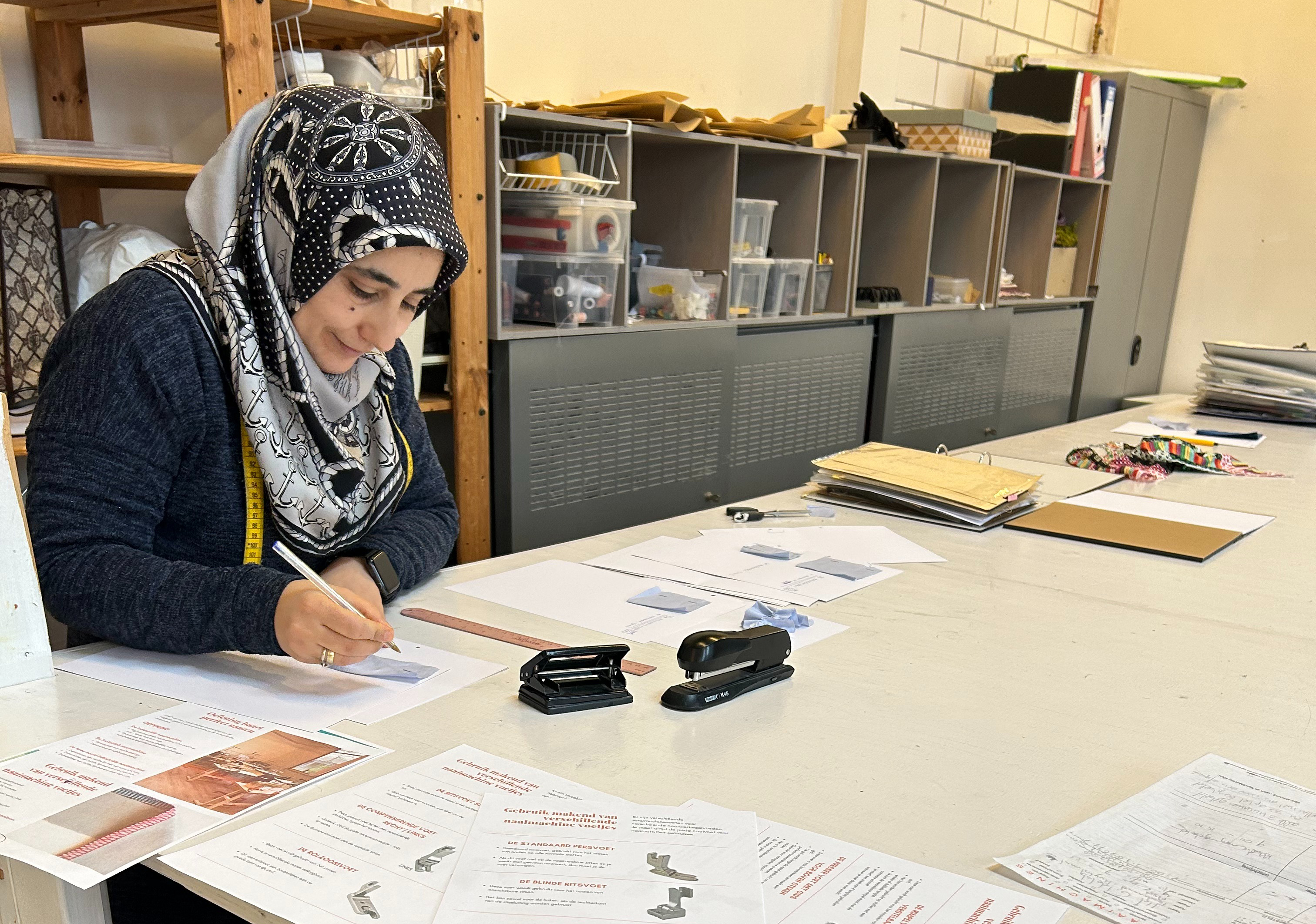
At first glance, GildeLab looks like a busy production atelier, sewing machines humming, fabrics piled high, the air filled with laughter and focus. But look a little closer and you’ll see that it’s much more than that. It’s a social enterprise, a training ground, and above all, a community helping women find their feet and take their next steps in life.
A Place to Start Again...
Many of the women who come to GildeLab have had a tough journey. Some are new to the Netherlands, still finding their way in a new culture. Others have been out of work for a while raising children, facing illness, or struggling to re-enter the job market. For all of them, stepping into GildeLab is a chance to start again.
The atmosphere here is welcoming and supportive. It’s not about pressure or perfection….it’s about growth. The women are invited to learn by doing: sewing and working on real orders for local ethical brands. They see their work take shape and feel the pride that comes with creating something beautiful and useful.
Learning, Working, Growing...
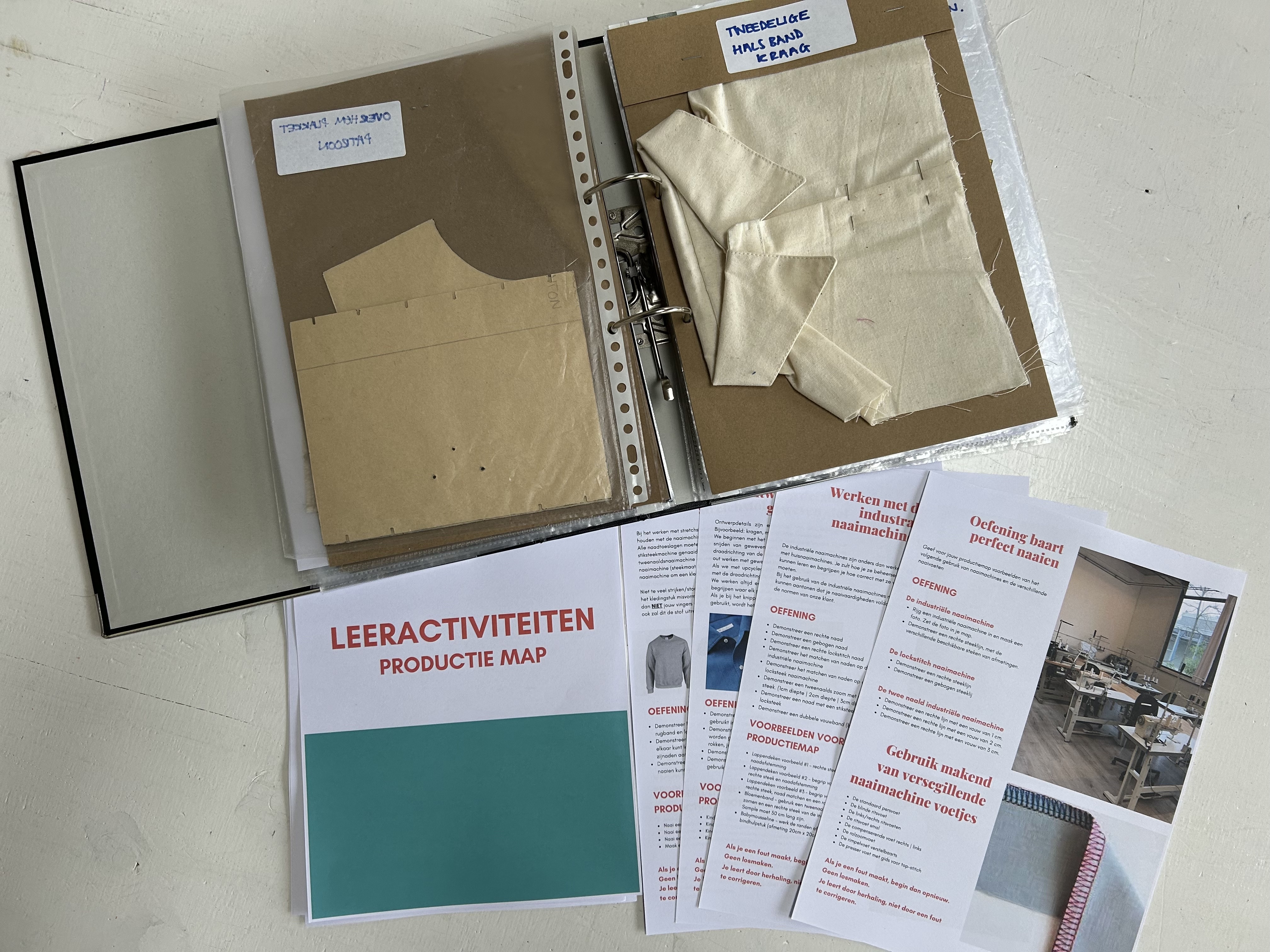
What makes GildeLab so special is its balance of learning and production. It’s not a classroom, but a working atelier where skills grow naturally through experience. Women learn everything from textile techniques to teamwork and time management. These are not just “soft skills” they’re the foundation for employment, independence, and confidence. As they get more comfortable, trainee-volunteers often take on more responsibility, guiding newcomers and sharing what they’ve learned. It’s a cycle of empowerment: each woman who grows helps another one take her first step.
Sustainability at the Core...
Beyond empowerment, GildeLab is deeply committed to sustainable, circular fashion. The team works with dead stock fabrics, small-batch materials, and local production methods to reduce waste. Every product carries a story, not only of craftsmanship, but of care for the planet and the people behind it. This focus on ethical production doesn’t just benefit the environment. It gives women a chance to learn about sustainability in practice something increasingly valuable in today’s fashion industry. They see that their work can have meaning beyond a paycheck; it can contribute to a fairer, cleaner world.
Finding Confidence and Connection...
Perhaps the most transformative thing GildeLab offers isn’t a skill at all it’s confidence. For many women, their first weeks at the atelier can feel daunting. But with each stitch, each project completed, they grow. They start believing in their abilities again. Soon, the fear gives way to pride. They talk about their work with joy. They laugh more. They begin to imagine possibilities further training, a job in fashion, even starting a small business of their own. And along the way, they form friendships that last. GildeLab becomes a second home a place where they’re seen, supported, and celebrated.
A Ripple of Change...
When you visit GildeLab, you can feel the energy, a quiet determination mixed with warmth. It’s the sound of women building something together: not just garments, but futures.
Each woman who leaves GildeLab takes her skills, confidence, and creativity out into the world. Some move into regular employment, others pursue further education, and some stay connected as mentors or collaborators. The ripple effect is real stronger women build stronger communities.
Why GildeLab Matters...
In a world where too many people fall through the cracks, GildeLab shows what’s possible when we invest in people’s potential. It’s not just about sewing; it’s about stitching lives back together, thread by thread.
With its blend of craftsmanship, care, and sustainability, Stichting GildeLab is proving that empowerment and enterprise can go hand in hand and that when women are given the tools to thrive, they can transform not only their own lives, but their communities too.